

By Jeff Lantz | 35-Year Osa Veteran & Founder of Osa Land Office
As we navigate the final months of 2025, investing in Puerto Jiménez real estate has evolved into a sophisticated global play. This isn’t just about buying a vacation home; it’s about securing a “Resilience Asset” in the most biologically intense place on Earth. Because 80% of our peninsula is protected by law, the land we *can* own is a finite resource. If you want to succeed here, you need more than a bank account—you need the ground-truth.
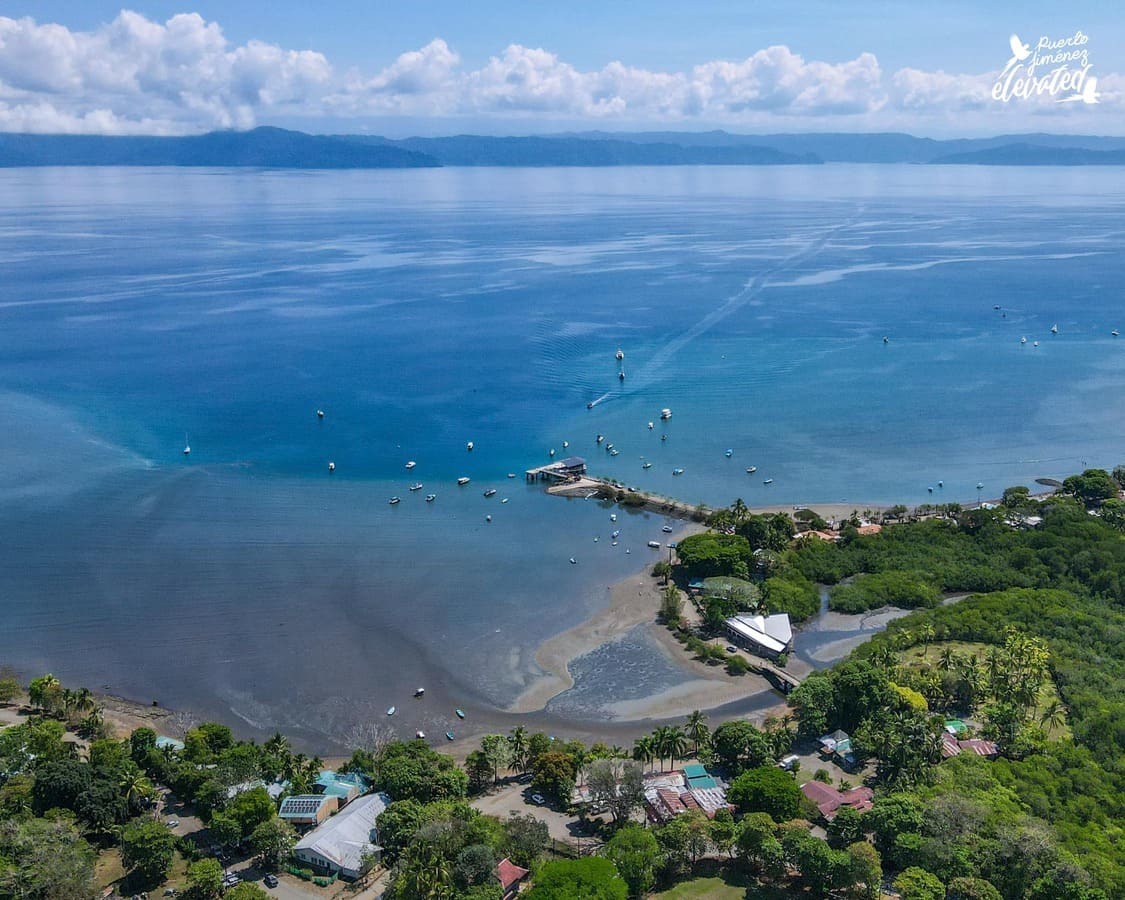
THE 2025 MARKET SHIFT: RESILIENCE OVER SPECULATION
The Costa Rican market is in a “Great Recalibration.” The post-pandemic frenzy is over, and what’s left is a healthier, more intentional buyer. While Guanacaste and the Central Pacific have seen inventory bloat, Puerto Jiménez real estate market trends show a different story. We are seeing a 21% year-over-year increase in demand for residential lots that are “ready to build”—meaning they have legal water, fiber-optic access, and a clear Uso de Suelo (land use permit).
One of the strongest signals I’m watching is the return of hospitality investment. When boutique hotels sell, it means the “smart money” is betting on the Osa’s infrastructure. We’re moving away from the “off-grid” frontier and into a phase of sustainable luxury. People are realizing that Costa Rica’s commitment to democracy and conservation isn’t just a marketing slogan; it’s the ultimate investment insurance policy.
WHERE TO INVEST: THE OSA REGIONAL BREAKDOWN
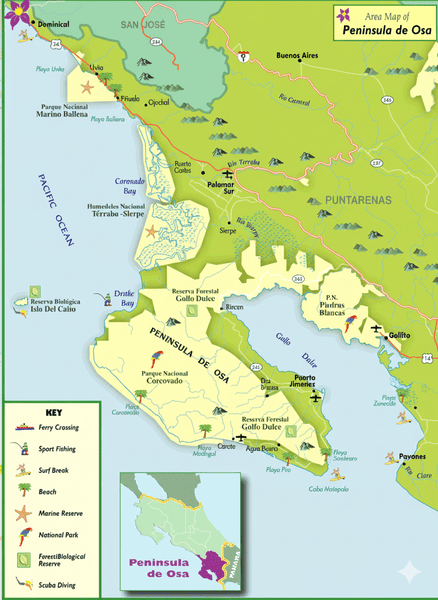
Strategic Geography: Understanding the investment zones of the Southern Osa.
I always tell my clients: The Osa isn’t one market; it’s a collection of micro-climates. Here is where the 2025 opportunities are concentrated:
-
Puerto Jiménez (The Anchor)
This is the central hub. It balances village life with essential services like the airstrip, banks, and clinics. For those seeking ease of living and high rental potential, PJ is the primary choice. -
Osa North (The Value Frontier)
From Rincon to PJ, you’ll find incredible rural deals. This area offers larger acreage and massive Gulf views for investors who want privacy without losing connection to town. -
Drake Bay & Golfo Dulce Shoreline
The ecotourism powerhouse. Properties here offer proximity to Corcovado National Park. It’s wild, adventurous, and perfectly suited for world-class eco-lodges.
Before you commit, remember that beachfront property involves Maritime Zone (ZMT) laws. Most land within 200m of the tide line is a concession (lease), not a fee-simple title. Navigating this requires a team that knows the municipal nuances.
THE BIODIVERSITY ROI
In 2025, the rarest asset on Earth isn’t gold; it’s pristine nature. When you are investing in Puerto Jiménez real estate, you are buying into the “2.5% Club”—owning land in the only place on the planet where this much life exists in one spot. Living alongside neighbors like the Chestnut-mandibled Toucan isn’t just a lifestyle choice; it’s a value-protector that ensures your land will only become more precious as the rest of the world develops.
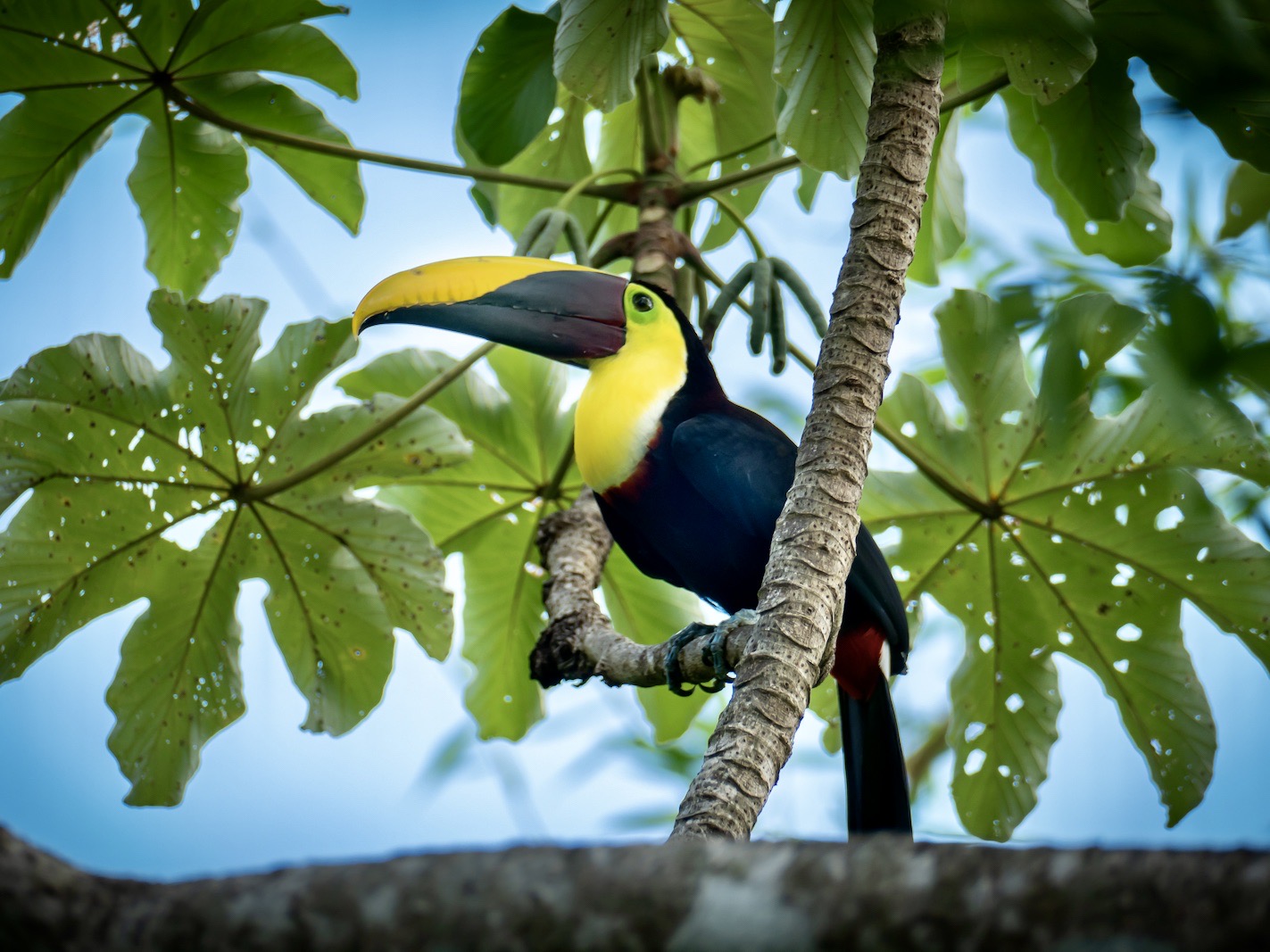
The Osa Advantage: A front-row seat to nature’s greatest show.
THE GROUND-TRUTH BUYING PROCESS: 5 PHASES
Buying land here isn’t a weekend activity; it’s a 60-day marathon. Here is how we handle a professional transaction at Osa Land Office:
Phase 1: Research & Discovery. We define your goals—rental income, retirement, or land banking. Is the road accessible year-round? Is there a legal water letter?
Phase 2: The Legal Offer. We use a Sales and Purchase Agreement (SPA). Your 10% earnest money is held in a SUGEF-regulated escrow account.
Phase 3: Due Diligence. This is the most critical 30 days. We engage a topographer to mark boundaries and an attorney to perform a “deep-dive” registry search for liens or labor claims.
Phase 4: Closing. The deed is signed before a Notary Public and submitted to the National Registry. Total closing costs typically range from 6% to 8%.
Phase 5: Ownership. We help with utility transfers and property management setup. In the Osa, your journey begins at closing.
EXPERT 2025 INTELLIGENCE: INVESTING IN OSA FAQ
Can I safely invest in Puerto Jiménez land if it lacks a formal Water Letter?
In the 2025 regulatory climate, a “Carta de Agua” is non-negotiable. Without it, you cannot get a SETENA environmental permit or a municipal building permit. We consider any property without verified water rights to be a high-risk liability.
How does the “Halo Effect” of resorts like Botanika influence local land prices?
Flagship brands like Hilton’s Botanika serve as a “Proof of Concept.” They signal to the market that the infrastructure is ready for luxury. This drives up the rental potential of nearby homes and villas and creates a stable floor for appreciation.
What is the 2025 tax withholding rule (Form 129) for foreign sellers?
If you are buying from a non-resident, the buyer is legally obligated to withhold 2.5% of the total purchase price as a tax guarantee. We ensure your attorney handles this withholding so you aren’t left with a surprise bill from the Ministry of Finance.
