

By Jeff Lantz | 35-Year Osa Veteran & Founder of Osa Land Office

Guide Contents:
THE 200 METER MARITIME ZONE STRIP
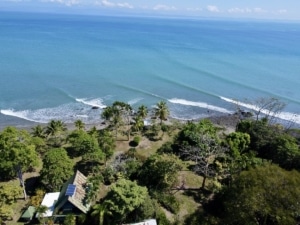
The 200 meter zone is strictly administered by local Municipalities and the ICT.
The land comprising the Maritime Zone is owned by the state and jointly administered by the local Municipality and the National Tourism Institution (ICT) and is defined as the 200 meter strip of land along the coastline measured from the average high tide.
This 200 meter zone is comprised of two parts – the first 50 meters from the average high tide is public domain or public zone and cannot be claimed by anyone. The adjoining 150 meter strip of land is called the restricted zone where third parties can solicit exclusive usage by the simple act of filing an application at the local Municipality. If the applicant meets the requirements they are granted temporary usage and eventual “first right to the concession” with the ability to develop the property according to the adopted zoning plan.
REGULATORY PLANS IN THE OSA PENINSULA
Surprisingly, the majority of Costa Rica’s coastline is still un-zoned to this day, lacking an approved Regulatory Plan. Here in the Osa Peninsula there are only four sectors having an approved Regulatory Plan (partial only) – Puerto Jimenez, Playa Platanares, Playa Sombrero and Cañaza.
All Regulatory Plans have clearly defined areas zoned for touristic type development, both commercial and residential and set aside areas for green zones, roads and access as well as public use areas for parking, bathrooms or other services.
RULES OF THE ROAD GUIDE
Buying and owning beach property involves a lot of informal history. We’ve compiled the technical details into a full guide to help you navigate the provisional policies of local Municipalities.
BUILDING AND CONCESSION REALITIES
Once a Regulatory Plan is approved, the pending concession applications can then be processed in accordance to the zoning. Concessions for residential and tourist projects are renewable in perpetuity for periods of a minimum of 5 years with a maximum of 20 years assuming compliance to the terms of the concession contract which basically are to respect the public zone, pay your concession tax and build in compliance to the zoning. Stories of 99 year leases are simply not true.
Surprisingly, building along the coastline in areas without approved zoning and concessions is very common although not completely legal. Municipal administration is strictly an interim policy for the purpose of organizing applicants on a provisional basis. These scenarios require specialized due diligence and scrutiny if a purchase is being considered.
PROCEDURES FOR BUYING COASTAL PROPERTY
The purchase of a registered concession for a beach property is somewhat similar to buying titled property. The due diligence involves verification of the public record to check for encumbrances and to review the terms and conditions of the concession contract and verify if the taxes are paid up to date.
On the other hand, buying beach property without a registered concession is an informal procedure, essentially a private agreement between two parties to transfer the improvements and the applicant’s first right of occupation. In these cases extra due diligence and expert advice is recommended.
Read Next: Closing and the Process of Settlement