

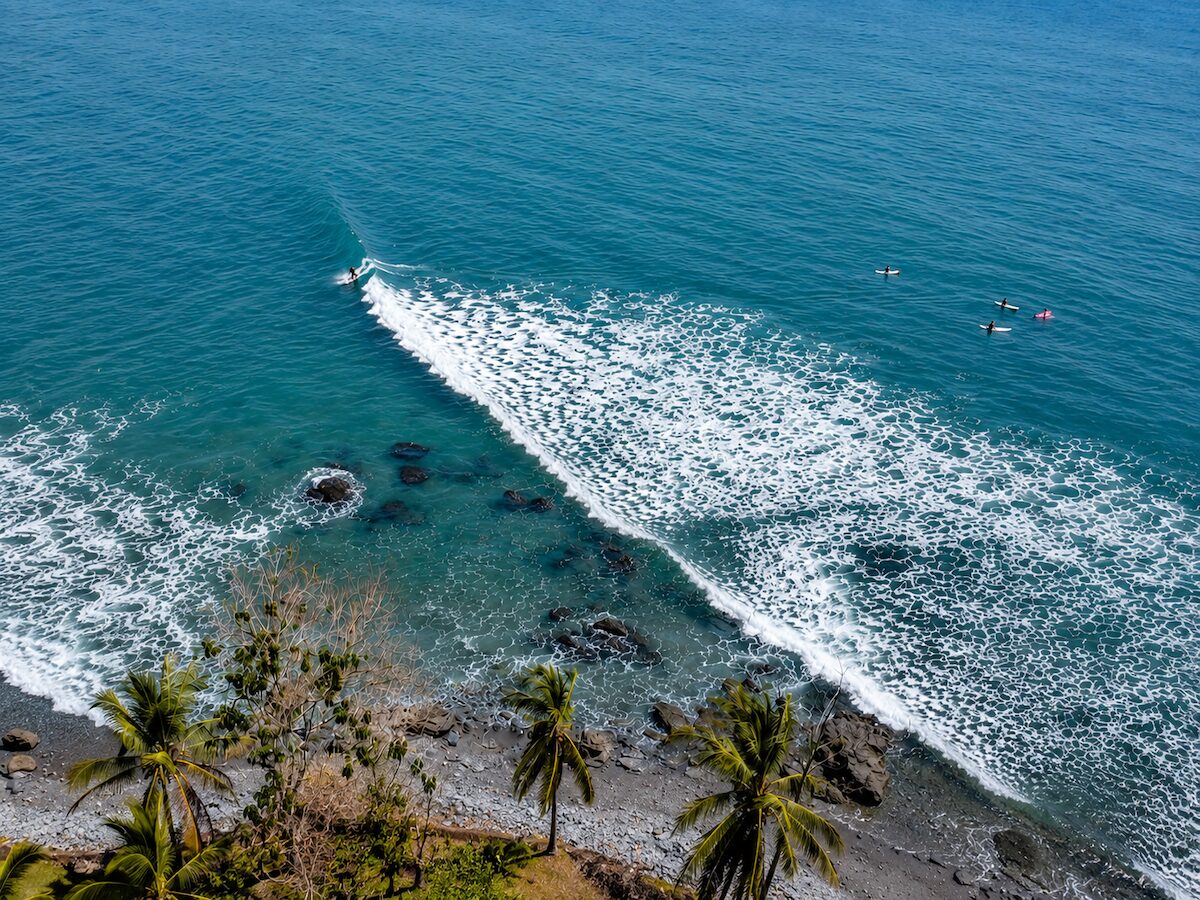
Every year I sit down with buyers who've spent months on real estate portals trying to figure out where to even start on this peninsula. It's a fair question. Cañaza doesn't behave like Matapalo. Matapalo doesn't behave like Drake Bay. A titled two-acre lot ten minutes from town has almost nothing in common — legally, financially, or practically — with a beachfront concession an hour down a dirt road. This page is the version of that first conversation I have with almost every client, written down: what's actually for sale here, where it sits, what it costs, and how to narrow it down before you get on a plane.
| Osa Peninsula, At a Glance | |
|---|---|
| Land under protection | ~80% of the peninsula |
| Regional hub | Puerto Jiménez (pop. ~7,000) |
| Nearest airport | Puerto Jiménez Airport, 5 SANSA flights daily from San José |
| Current inventory span | $65,000 building lots to $6.99M development sites |
| Primary ownership types | Titled (fee simple) and maritime zone concession |
Why Buyers Choose the Osa Peninsula
I came here in 1988 to build a lodge on a beach nobody wanted, and I earned my residency in 1994 doing conservation work I'd still do for free. Thirty-five years later, the reason buyers end up here hasn't changed much: roughly 80% of the Osa Peninsula sits inside protected reserves, national park land, or forest buffer zones. That's not a marketing line — it's a land-use fact that caps how much titled property can ever exist here. Everything I sell sits inside the remaining 20%, and that scarcity is the entire foundation of long-term value on this peninsula.
What that means for a buyer standing in my office: you are not choosing between "Osa" and fifty other tropical Costa Rica markets that all sell the same product. Guanacaste built a tourism economy first and sold real estate around it. The Osa did the opposite — Corcovado National Park and the surrounding reserves came first, and development had to fit around them. The result is a market with far less inventory, far more variation in title type, and buyers who tend to be here for reasons beyond a beach view: conservation-minded landowners, off-grid retirees, eco-tourism operators, and people who visited once and couldn't stop thinking about it.
The Osa Peninsula holds an estimated 2.5% of the entire planet's biodiversity within a landmass smaller than most U.S. counties. Corcovado National Park alone is the last real stronghold for wild jaguar populations in Costa Rica, and it holds the largest population of Scarlet Macaws left in Central America.
I built the Iguana Lodge here before "eco-lodge" was a category anyone marketed. I chaired the JICA zoning initiative for the southern zone and served as the first president of the foreign owners' association, so when I tell a buyer how a title search actually runs or where a canton boundary sits, it's not from a course — it's from three and a half decades of doing it. That matters on this peninsula more than almost anywhere else in Costa Rica, because so much of what determines whether a property is a good buy — buffer zone proximity, water letter status, road access history, canton jurisdiction — never shows up on a listing sheet. Read our full history of the Osa Peninsula or meet the team if you want the longer version.
The buyers I work with break down into a handful of consistent groups: international buyers relocating full-time, investment buyers chasing rental income or land appreciation, retirees looking for a slower pace with real infrastructure, vacation-home buyers who want a place they'll actually use, developers evaluating larger acreage, and a growing group of conservation-minded buyers who want land specifically to keep it forested. All six groups end up asking me variations of the same three questions: what's actually available, what's the difference between the areas, and how do I avoid the mistakes I've read about. That's what the rest of this page walks through.
What Scarcity Actually Means Here
Buyers hear "80% protected" and treat it as a slogan. It isn't — it's a hard ceiling on supply. Corcovado National Park, the Golfo Dulce Forest Reserve, the Piedras Blancas buffer, and a network of smaller reserves and wildlife refuges cover the majority of the peninsula's landmass permanently. No zoning change, no future administration, no developer relationship changes that. What's titled and buildable today is close to what will ever be titled and buildable here, which is the entire reason a titled parcel near Puerto Jiménez has held value the way it has over the past decade, even through periods when broader Costa Rica coastal markets cooled off. This is also why I tell every buyer to prioritize title clarity over square footage — a smaller titled lot beats a larger parcel with a murky title, every time, on this peninsula specifically.
Which Property Type Fits Your Situation
Before you start comparing individual listings, it helps to know which category of buyer you actually are — because the right property type differs sharply by goal, and mixing them up is the single most common way buyers waste six months of searching.
| Buyer Type | Best-Fit Property Category | Priority to Verify First |
|---|---|---|
| International / Relocation Buyer | Titled home in or near Puerto Jiménez | Utility connection, hospital/school proximity |
| Retiree | Titled home, Cañaza or in-town lot | Road access in rainy season, medical proximity |
| Vacation-Home Buyer | Titled home or lot, Matapalo or Puerto Jiménez | Rental-management availability if left vacant |
| Investment / Rental Buyer | Botánika condo or standalone income property | ICT tourism registration status, permit history |
| Developer | Large acreage, Zapote or Golfo Dulce coast | Uso de suelo, SETENA and water availability |
| Conservation Buyer | Forested acreage, Carate or Drake Bay | Buffer zone status, Forestry Law 7575 classification |
None of these are hard rules — I've closed beachfront deals for retirees and jungle lodges for first-time vacation buyers. But when a buyer tells me their goal first, I can usually cut a three-month search down to a handful of properties worth actually flying down to see.
Property Types Available Right Now
Inventory on the Osa moves in a handful of consistent categories. Here's how I'd sort what's currently on the market.
Titled Homes & Move-In Ready Properties
Fee simple, registered in the National Registry, ready to close and move into. This is the category most first-time buyers should start with, because it carries the fewest legal complications of anything sold on this peninsula. Right now that includes homes like a turn-key home in Puerto Jiménez, a titled urban property in town, and rural houses such as this titled home with acreage. For the legal mechanics of what "titled" actually guarantees you, see our titled property guide. The trade-off in this category is usually price per square foot versus land — in-town titled homes sit at a premium over rural equivalents because the supply of titled, serviced in-town lots is genuinely limited.
Raw Land & Building Lots
The largest category by volume. This ranges from ready-to-build lots with road access and utilities near Puerto Jiménez — like the ready-to-build lots in Cañaza priced from roughly $65,000 to $120,000 — up through multi-acre parcels such as a 12-acre rainforest parcel near town, a large building lot surrounded by nature, or 21 acres of tropical farmland. Cañaza specifically has become the default zone for buyers who want titled land, road access, and proximity to town without beachfront pricing. If you're buying raw land with an eye toward building within the next year or two, confirm the water letter timeline before you close — a lot can be perfectly titled and still sit unbuildable for months waiting on ASADA paperwork.
Ocean View & Elevated Parcels
A distinct category from beachfront: titled land set back from the coastline, often on ridgelines, that trades direct beach access for unobstructed Pacific or Golfo Dulce views and lower price points. Current examples include an ocean-view titled property, a high-elevation rainforest and ocean-view property, and an ocean-view lot inside a private community. For buyers who want the view without concession-zone restrictions, this is usually the better long-term hold.
Beachfront & Maritime Zone Concession Property
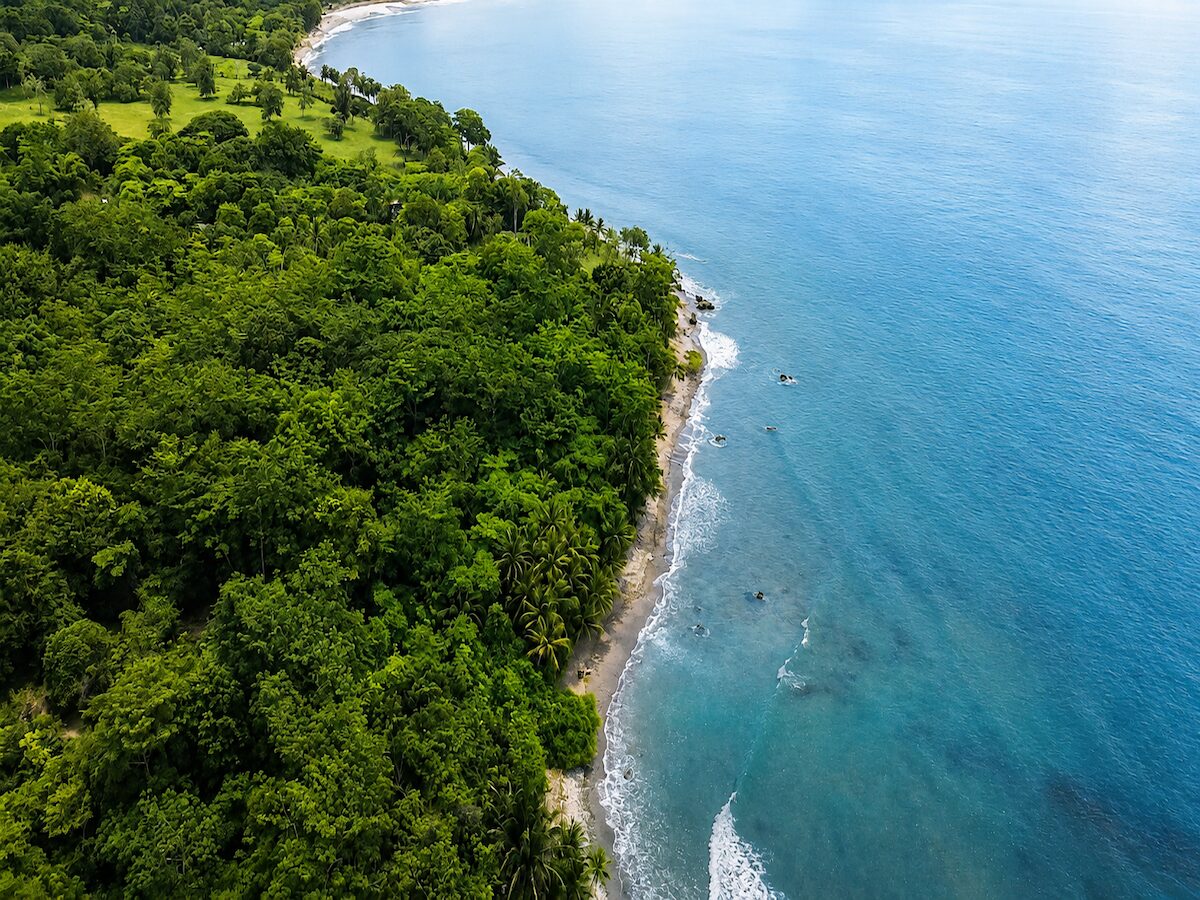
Anything within 200 meters of the high tide line falls under Costa Rica's Maritime Zone Law, and what's sold there is a concession right, not a title. Current listings include a 12-acre beachfront property, a two-house Matapalo beach property, and beachfront acreage in Carate. A separate class — titled land that sits just beyond the 200-meter line with beach access via easement — often gives buyers ocean proximity without concession restrictions; our beach property guide covers the concession-versus-titled distinction in full.
Investment & Turnkey Properties
Income-producing property is its own category here, and it splits into two types: branded resort inventory and standalone rental operations. The Botánika Resort — a Hilton-affiliated property near Puerto Jiménez — has resale units from roughly $220,000 for studios up to $635,000 for one-bedroom units, including one-bedroom condominium resales and studio units. Watch our Botánika ROI breakdown video for the mechanics of how that ownership model works. Standalone income property includes listings like an investment property on 5 titled acres and multi-unit properties such as a home with three furnished rental apartments in Puerto Jiménez.
Large Estates & Conservation Acreage
At the top of the market, the Osa has a category that barely exists elsewhere in Costa Rica: large, titled conservation-grade estates. Finca Bellavista, a globally recognized 600-acre sustainable treehouse community, has core infrastructure priced from $2.95 million up to $4.9 million for the full estate, with individual off-grid treehouse homes entering as low as $68,000–$80,000 — a rare entry point into a conservation-first community without buying the entire holding. The Carate Rainforest Estate — 113 hectares of extreme privacy on the edge of Corcovado — is listed at $6.25 million and appears on-site as a spectacular coastal rainforest estate. On the coast, the El Delfín Violeta project — a pre-feasibility approved marina, hotel, and residential development on the Golfo Dulce — is listed at $6.99 million and represents the largest single planned development currently on the market here. These are conservation-buyer and developer properties first, lifestyle properties second.
Condo & Branded Resort Ownership
The Botánika Resort is the only branded, Hilton-affiliated ownership structure currently active on the peninsula, and it works differently from every other category on this page. You're buying a titled condominium unit inside a managed resort, with HOA fees covering shared amenities and on-site rental management already in place — meaning you skip the operational work of running a standalone rental but give up direct control over pricing and guest selection. It's the lowest-effort entry point into Osa hospitality real estate, and the trade-off is exactly that: less effort, less control.
| Property Category | Typical Price Range | Title Type |
|---|---|---|
| Ready-to-build lots (Cañaza) | $65,000 – $120,000 | Titled |
| Titled homes, in-town or rural | $220,000 – $790,000 | Titled |
| Beachfront & concession land | $375,000 – $1.79M+ | Concession or Titled-adjacent |
| Botánika resort condos | $220,000 – $635,000 | Titled (condominium) |
| Large estates / conservation acreage | $2.95M – $6.99M | Titled |
Ranges reflect current and recently offered inventory as of 2026 and will shift with the market. They are not a guarantee of price or availability on any specific parcel.
What Makes a Strong Osa Peninsula Property (And What Doesn't)
Buyers get pulled in by a view or a price and skip evaluating the fundamentals underneath it. After thirty-five years of walking these properties, here's the order I actually check things in.
Access
Can you legally reach the property year-round, not just in dry season? A dirt track isn't the same as a registered right of way. I've seen buyers discover — after closing — that the "access road" they drove in on crosses a neighbor's titled land with no recorded easement. Verify registered access before anything else.
Water
Confirmed ASADA connection or a valid, current water availability letter beats a beautiful lot with an uncertain water source every time. A property without confirmed water isn't unbuildable forever, but it is unbuildable now, and that changes what you should be willing to pay for it.
Elevation & Drainage
This peninsula gets serious rain. Low-lying parcels near rivers or seasonal creeks can look perfect in February and flood in October. Ask about rainy-season conditions specifically, and if you can't see it yourself in green season, ask your agent or attorney to document it.
Forest Cover & Buffer Zones
A heavily forested lot can be a beautiful asset or a legal constraint, depending entirely on its classification under Forestry Law 7575 and its proximity to a protected buffer. Know what you can and can't clear before you factor "buildable acreage" into your price comparison.
Distance to Services
Every kilometer from Puerto Jiménez adds real friction — grocery runs, medical access, contractor availability for a build. That's not a reason to avoid remote parcels; it's a factor to price in honestly rather than discover after you've moved in.
Titled Land vs. Maritime Zone Concessions: The Practical Version
This distinction decides more about your purchase than location does, so here's the version I give buyers before they start touring properties — the full legal breakdown lives on our Costa Rica property laws guide, but this is what actually matters when you're comparing two listings side by side.
Titled (fee simple) land is registered in the National Registry under a folio real number. You own it outright, the same way you'd own property in the U.S. or Canada, with no residency requirement, no renewal date, and no restriction on foreign ownership percentage. This covers most inland parcels on the peninsula, including land with ocean views and beach access via easement.
Maritime zone concessions apply to anything within 200 meters of the high tide line. The first 50 meters is public land — nobody owns it, titled or otherwise. The next 150 meters can be used under a government-granted concession, which is a right to use the land, not ownership of it. Concessions run on fixed terms, require municipal renewal, and — as covered in the FAQ below — carry real restrictions on foreign ownership share if held through a corporation.
Neither type is inherently the wrong choice. Concession property can make sense for a buyer who specifically wants direct beachfront and understands the renewal and financing limitations going in. What I won't do is let a buyer discover the difference after they've already fallen in love with a listing photo — ask the title type on every property before you schedule a viewing, not after.
Communities: Where to Buy
Location decides more about your experience here than the property itself does. These are the six areas I point buyers toward, and why.
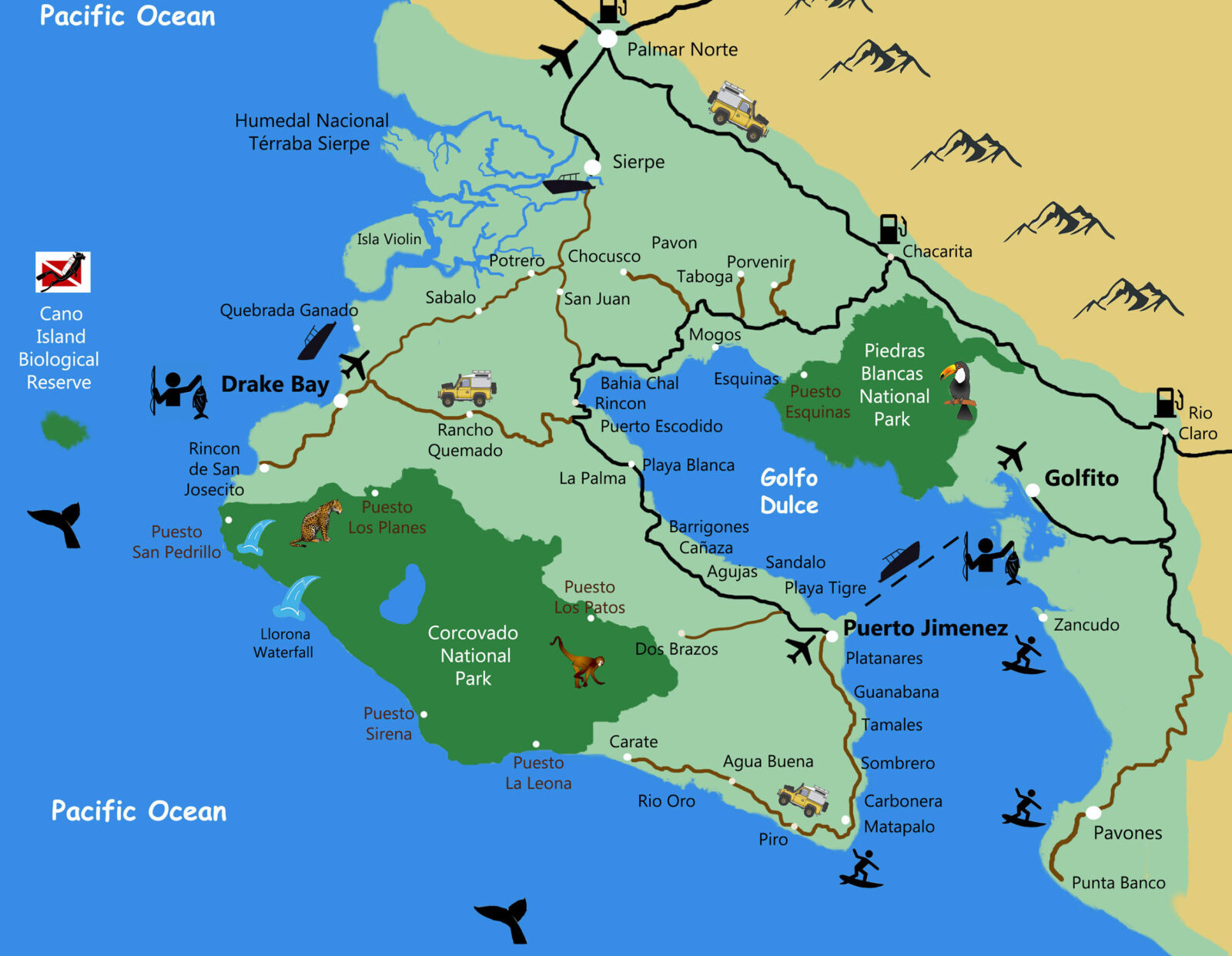
The Osa Peninsula stretches from Puerto Jiménez on the Golfo Dulce side out to Carate at the edge of Corcovado National Park.
Puerto Jiménez — The Hub
Puerto Jiménez is where infrastructure lives: the airstrip with daily SANSA flights to San José, the hospital, the schools, the grocery stores, the bank. It's a town of roughly 7,000 people that somehow draws buyers from over 30 countries a year — an international-to-local ratio you won't find in most rural Costa Rica markets. If you want walkable amenities with jungle five minutes in any direction, this is the area, and our dedicated Puerto Jiménez properties page goes deeper on current inventory there. This is where I steer relocation and retiree buyers first, unless they've told me directly they want more distance from town.
Cabo Matapalo — Surf, Privacy, Old-Growth Canopy
Matapalo sits at the southern tip of the peninsula where the Golfo Dulce meets the open Pacific, known among surfers for its point breaks and among everyone else for some of the last stretches of primary-growth canopy left on titled land. Inventory here runs from titled building lots to point-break beachfront property and larger holdings like ocean-and-forest-view lots. Matapalo commands a premium over Puerto Jiménez on a price-per-acre basis, and it earns it — this is the area vacation-home buyers and surf-focused buyers ask for by name.
Carate & the Edge of Corcovado — Remote and Untouched
Carate is the end of the road, literally — the last drivable point before Corcovado National Park's southern ranger station. This is where you find buyers who want genuine isolation: turnkey jungle lodges, off-grid homesteads, and rainforest estates. Current listings include a turn-key jungle lodge and a jungle-beach retreat property. Understand the trade before you commit here: no grid power on most parcels, longer supply runs, and a real commitment to off-grid systems. The buyers who thrive in Carate are the ones who wanted that specifically, not the ones who settled for it because the price was lower.
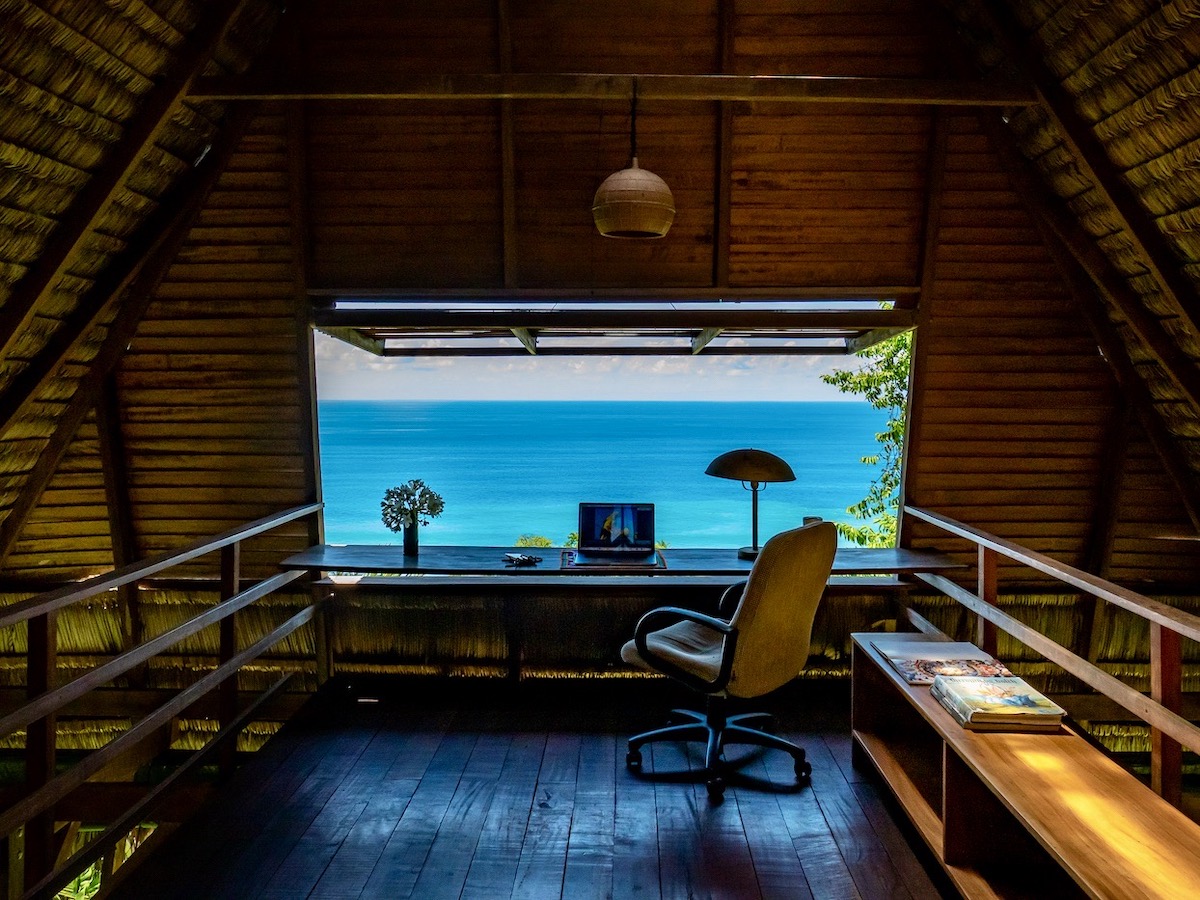
Carate properties trade convenience for privacy — this is the most remote, least-developed corner of the peninsula's titled land.
Drake Bay (Rincón) — Newly Accessible
Drake Bay used to mean boat-access-only luxury. New bridges and road improvements have eliminated the 4x4 river crossings that once kept inland Rincón parcels out of reach, opening properties like the ocean-view off-grid mountain homestead to standard vehicle access for the first time. A 14-hectare Rincón de San Josesito estate — combining titled land and concessioned beachfront — is currently listed at $3 million, reflecting the shift this area is going through.
Golfo Dulce & Golfito — The Tropical Fjord Coastline
The Golfo Dulce is one of only four tropical fjords on Earth, dropping to depths of over 200 meters just offshore, and it's the calmer, protected-water counterpart to the peninsula's open-Pacific side. Listings along this coast include a titled waterfront property in Golfito Bay and a turnkey property near a Golfo Dulce beach Buyers looking specifically at this side of the peninsula tend to be drawn by the calmer water for boating and diving access rather than the surf that defines Matapalo.
On moonless nights, the Golfo Dulce glows — agitated water lights up neon blue from concentrations of bioluminescent plankton. It's also one of the only inner-gulf waters in Costa Rica with no venomous sea snakes, making it unusually safe for swimming and diving.
Sombrero Beach — Quiet, Close to Town
A smaller pocket on the Golfo Dulce side, close enough to Puerto Jiménez for a short commute but removed from the town center's activity. This is where buyers land when they want walkable-to-beach living without giving up proximity to the airport, hospital, and grocery stores — a middle ground between full in-town convenience and the isolation of Matapalo or Carate.
Playa Zapote — The Infrastructure Story
Zapote is the area I'd point an appreciation-focused buyer toward first in 2026. The Highway 245 paving project is nearing completion here, cutting construction logistics costs by an estimated 40% and shortening travel time significantly. The national grid is expanding along the newly paved route, converting land that was off-grid pastureland into viable residential zones in real time. A 17-hectare beachfront property with 525 meters of Golfo Dulce frontage and an existing Maritime Zone permit is currently listed at $5.1 million here — one of the few large parcels on the market with development permitting already in place.
How the Osa Compares to Guanacaste and the Central Valley
I get this question from almost every buyer who's shopped Costa Rica real estate before landing on the Osa. The legal framework is identical everywhere in the country — same National Registry, same Maritime Zone Law, same transfer tax structure. What actually differs is infrastructure maturity, price per acre, and what you're trading for it.
| Factor | Guanacaste | Central Valley | Osa Peninsula |
|---|---|---|---|
| Infrastructure maturity | High | Highest | Developing, improving fast |
| Price per titled acre | High | Moderate | Lower, with tighter supply |
| Foreign buyer density | Very high | Moderate | Low, growing |
| Attorney experience with foreign deals | Extensive | Extensive | Specialized, smaller pool |
| Protected-land proximity | Moderate | Low | Extreme — most valuable asset class |
Guanacaste built its market around resort tourism first — Tamarindo, Nosara, Playa Flamingo — which means more concession inventory, deeper title histories on coastal parcels, and a larger bench of attorneys who've closed hundreds of foreign transactions. The Central Valley is the most standardized market in the country: easiest utility verification, most established legal precedent, least exotic due diligence. The Osa trades that maturity for something Guanacaste and the Central Valley simply don't have — proximity to land that will never be developed, at a fraction of the price per acre. A titled gulf-coast parcel here is a different asset class than anything available at the same price point further north, but it demands buyers willing to do more thorough due diligence and work with agents and attorneys who specialize in this specific region.
Investment Opportunities
Three infrastructure shifts are moving through the Osa Peninsula right now, and each one changes the investment math for a different type of buyer.
- Highway 245 paving to Playa Zapote — nearing completion, cutting construction logistics costs by an estimated 40% for that corridor.
- ICE grid electrification — expanding along the newly paved routes, turning previously off-grid land into standard residential-zone property.
- Drake Bay road and bridge improvements — removing the river-crossing barrier that historically limited Rincón to boat access or 4x4-only buyers.
- SANSA flight frequency — five flights a day now connect San José to Puerto Jiménez and Drake Bay, sustaining higher-end demand on both ends of the peninsula.
I generally point investment-focused buyers toward three strategies. Eco-tourism development — acquiring larger tracts to build lodges that capitalize on the region's protected-land branding, something the market here has rewarded consistently since I opened Iguana Lodge. Land banking — buying titled land in an area like Zapote ahead of full infrastructure completion, understanding this is a multi-year hold, not a flip. Turnkey acquisition — buying an already-permitted, operating business (a lodge, a rental portfolio, a resort unit) specifically to skip the permitting timeline in a region where SETENA and municipal approvals can take a long time to clear.
On rental income specifically: Botánika resort units carry a documented resale and rental track record worth reviewing directly rather than taking my summary of it — our $220K Hilton investment ROI breakdown and 18-guest income property breakdown near Golfo Dulce walk through real numbers on two different property types. I won't project returns on this page — every property, management arrangement, and occupancy pattern is different, and anyone who guarantees you a return on Costa Rica real estate is telling you what you want to hear, not what's true. For a deeper look at the Puerto Jiménez investment case specifically, see investing in Puerto Jiménez real estate.
Matching Strategy to Location
| Strategy | Best-Fit Area | Time Horizon |
|---|---|---|
| Eco-tourism development | Carate, Drake Bay | 3–7 years to stabilize operations |
| Land banking | Playa Zapote | 5+ years, ahead of full build-out |
| Turnkey acquisition | Puerto Jiménez, Golfo Dulce coast | Immediate income, existing permits |
| Branded resort resale | Botánika, Puerto Jiménez | Immediate, management in place |
Whichever strategy fits, the underlying math is the same: this peninsula cannot manufacture more titled land. That's a structural fact, not a sales pitch — and it's the reason land banking works here in a way it doesn't in markets with abundant developable acreage.
Risk Factors Worth Weighing Honestly
This is a thin market compared to Guanacaste or the Central Valley — fewer transactions, less price transparency, and longer average time to sell when you eventually exit. Remote parcels carry real infrastructure-completion risk; a highway paving project "nearing completion" can still take longer than projected. Treat any Osa Peninsula purchase, income property included, as a five-to-ten-year hold at minimum, not a short-term flip. Buyers who go in with that time horizon tend to be the ones who come back and buy a second property.
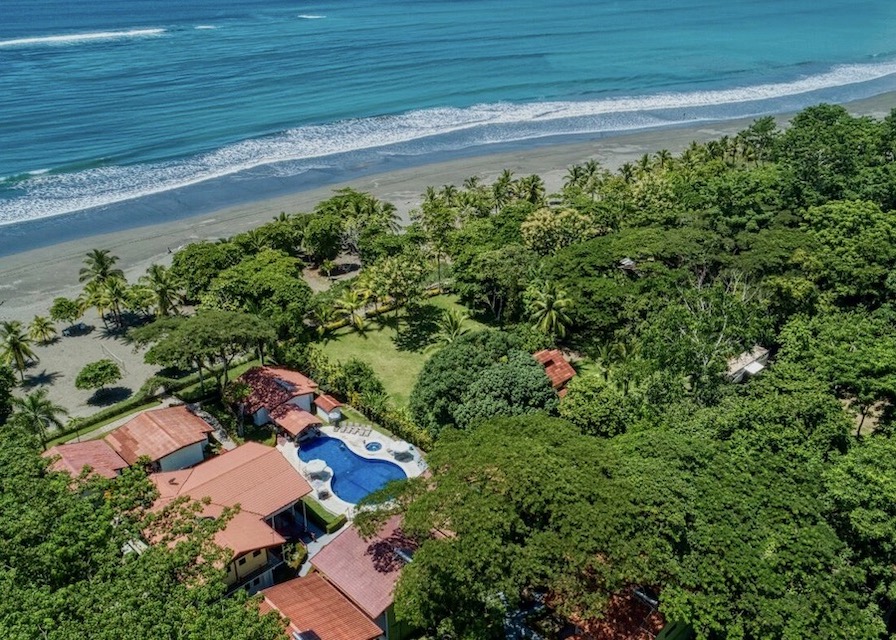
Land along the newly paved Highway 245 corridor is the clearest infrastructure-driven opportunity on the peninsula right now.
Life on the Osa
People ask me what a normal week actually looks like out here, so I'll answer it plainly. Puerto Jiménez has what you need day-to-day — groceries, a hospital, a hardware store, a functioning bank — and everything past that is a short drive into working farms, jungle, or beach. Wildlife isn't a tourism backdrop, it's a daily fact: scarlet macaws pass over most properties at dawn and dusk, howler monkeys wake you up whether you want them to or not, and this is one of the last real strongholds for wild jaguar in the country. Humpback whales use the waters off the Osa as a nursing ground, migrating in from both hemispheres to give birth — you can watch that from shore in season.
The retiree and relocation buyers I work with consistently underestimate two things going in: how much infrastructure has actually arrived here in the last few years (paved roads, grid power, daily flights, a real hospital), and how small the expat community actually is by design. This isn't Tamarindo. There's no golf-cart resort culture. What you get instead is a community that self-selects for people who wanted the real version of this — quieter, more self-sufficient, and genuinely tied to the land they bought.
Social life here runs through a handful of consistent touchpoints — a Friday farmers market in Puerto Jiménez, a small but genuine restaurant scene built around fresh-caught fish and local produce, the foreign owners' association I helped start decades ago, and a conservation community that overlaps constantly with the real estate community, because so many buyers end up involved in the same reforestation and wildlife corridor projects. It's a small enough town that you'll know your neighbors within a few months, for better and occasionally for worse.
Puerto Jiménez started as a rough logging and mining town, reachable mainly by boat or small plane before the coastal highways existed. Gold miners still pan the rivers near Corcovado today — a direct link back to the region's 1970s–80s gold rush era.
Practical Day-to-Day Notes
A few things buyers consistently ask about once they're past the "should I buy here" stage. Internet has improved dramatically with the fiber and cellular buildout tied to the same infrastructure push behind the Highway 245 project — most in-town and Cañaza properties now support remote work reliably; Carate and deep Rincón properties still depend more on satellite service. Healthcare runs through the Puerto Jiménez clinic and hospital for routine needs, with more serious care requiring a flight or drive to San José — a genuine factor for retirees to plan around, not a reason to avoid buying here. Grid power now reaches most of the Puerto Jiménez–Cañaza corridor and is expanding along the paved Zapote route; properties beyond that still typically run on solar or generator systems, which buyers should budget for as part of the purchase, not an afterthought.
How the Buying Process Works
Every buyer I work with moves through the same sequence, whether they realize it or not: research, market comparison, area comparison, property comparison, viewing, then an offer. Here's what each stage actually involves.
Research & Market Comparison
This page and our 2026 Costa Rica Buyers Guide are built for this stage. Before you compare specific properties, understand the ownership types you're choosing between — titled fee simple versus maritime zone concession — covered in full in our Costa Rica property laws guide.
Area & Property Comparison
Use the communities section above to narrow to two or three areas, then start filtering by title type, water access, and road access — in that order. A property with an ocean view and no confirmed water letter is not a better buy than a plainer lot with water rights already in hand. Browse current inventory on our full Osa Peninsula real estate listings page.
Due Diligence Before You Offer
Once you've picked a property, due diligence covers title search and folio real history, lien and encumbrance checks, water availability confirmation with the local ASADA, and — for anything near Corcovado or other protected areas — buffer zone verification. There is no title insurance system in Costa Rica equivalent to the U.S., so this stage is not optional and should not be rushed regardless of how eager you are to close. Our most common buyer mistakes article covers the specific errors that cost people money at this stage.
A Realistic Timeline
Buyers ask how long this actually takes from first call to keys in hand. Here's the honest range I give people, not the optimistic one agents sometimes lead with.
| Stage | Typical Duration |
|---|---|
| Research & area selection | 2–6 weeks (often longer, remotely) |
| Property tours in-country | 3–7 days on the ground |
| Offer to signed purchase agreement | 1–2 weeks |
| Due diligence period | 3–6 weeks |
| Closing (deed execution) | Days, once due diligence clears |
| Registry processing of new title | 4–8 weeks after closing |
Total, most buyers are looking at three to five months from serious search to registered ownership. Rushed timelines are almost always where due diligence gets shortchanged — build the schedule around the due diligence period, not around it.
Environmental Due Diligence Specific to This Peninsula
This step matters more here than almost anywhere else in Costa Rica, because so much of the Osa sits against protected land. Confirm SINAC buffer zone status for anything near Corcovado or another reserve, verify the property's forest classification under Forestry Law 7575 if any part of it is wooded, and — for anything requiring larger-scale development — check whether SETENA environmental viability approval applies. None of these should be treated as a formality. A property that looks buildable on a listing sheet can carry restrictions that only show up once an engineer or attorney actually pulls the file.
Closing & Financing
Closings run through a Notario Público, with registry processing typically taking a few weeks after signing. If you're financing any part of the purchase, start that conversation early — see our financing property in Costa Rica guide and our full closing and settlement process breakdown for the complete timeline.
Budgeting Beyond the Sale Price
Total closing costs on a Costa Rica property typically land in the 3–5% range on top of the purchase price, covering transfer tax, registry stamps, notary fees, and your own attorney's fee. High-value homes should also factor in the annual luxury property tax, which applies above a construction-value threshold adjusted yearly. None of this replaces a conversation with your own attorney — it's here so you're not blindsided by it mid-negotiation.
Where Buyers Lose Money
In order of how often I see them: skipping or rushing due diligence, misunderstanding concession land as titled land, buying a property with no verified legal access, and closing on a home with unpermitted construction. Every one of these is avoidable with the right sequence of checks before you sign anything — our Osa Peninsula real estate mistakes article breaks down each one with real examples.
Want the Full Buyer's Roadmap?
Our free 2026 Costa Rica Buyers Guide covers titles, taxes, due diligence, and the Southern Zone market in one download.
Get the Free Buyers GuideTerms You'll Hear While Buying Here
A quick reference for the vocabulary that comes up constantly once you start seriously shopping Osa Peninsula properties for sale.
- Folio real — the unique registry number assigned to every titled property in Costa Rica's National Registry; your title's fingerprint.
- ASADA — the local community association that manages rural water supply and issues the Carta de Agua (water availability letter) required for a building permit.
- Concession — a government-granted right to use land within the maritime zone's restricted 150 meters; not the same as ownership.
- Uso de suelo — the municipal land-use classification determining what a property is legally permitted to be used for, including whether short-term rental is allowed.
- SETENA — the national body that reviews environmental viability for development projects above certain size thresholds.
- SINAC — the conservation-area authority that enforces buffer zone setbacks near parks and reserves like Corcovado.
- Notario Público — a licensed attorney with government authority to execute the public deed that transfers property at closing.
- RTBF — the beneficial-ownership registry filing required when a corporation holds title, identifying the real individual owner.
Featured Listings by Category
A working sample of what's currently on the market, grouped the way I'd walk a buyer through it. Full, current inventory is always on our Osa Peninsula real estate listings page — property availability changes faster than any page can track.
- Ready-to-Build Land, Puerto Jiménez
- Large Building Lots, Osa Peninsula
- Titled Lot, Matapalo
- 2.4-Acre Building Lot
- Turn-Key Home, Puerto Jiménez
- 3-Bed Home Near Puerto Jiménez
- Homestead Property
- Titled Home with Acreage
- Point-Break Beachfront, Matapalo
- 7-Acre Ocean-View Property
- Beachfront Acreage, Carate
- 27-Acre Ocean View, Primary Forest
- Botánika Resort, 1-Bedroom
- Investment Property, 5 Titled Acres
- Home + 3 Rental Apartments
- Turn-Key Jungle Lodge, Carate
- Coastal Rainforest Estate, Carate
- Rainforest & Ocean View Retreat
- Mountain Property, Osa Peninsula
- Ocean View Resort Property
Frequently Asked Questions
The questions I hear most often from buyers looking at Osa Peninsula properties for sale — fact-checked against primary sources, not recycled marketing copy.
The rate moves by the hour, so treat any fixed number on a webpage as already stale — as of mid-July 2026 it's trading in the 450–456 colones-per-dollar range. What matters more than the exact figure: property taxes, municipal fees, and utility deposits here are billed in colones, while sale prices are negotiated in dollars, so a swing in either direction changes your real cost of ownership after closing. Check the live rate directly before wiring funds, and budget in dollars for the purchase but in colones for ongoing costs — our financing property in Costa Rica guide covers how currency movement factors into a full closing budget.
Most rural water here runs through a local ASADA — a community water association operating under AyA oversight. Before closing on anything without municipal water, confirm you can get a Carta de Agua (water availability letter); it's mandatory for a construction permit. These letters typically expire within six to twelve months, so buying raw land in Cañaza or elsewhere to hold for years before building on a letter you already have is a real risk — plan your build timeline around the letter, not the other way around. Current ready-to-build lots in Cañaza already have this confirmed before listing.
Yes — but the timeline is 2024, not 2026. Puerto Jiménez became Costa Rica's 84th canton by law signed April 8, 2022, and its own independent municipal government took office May 1, 2024, following the February 2024 municipal elections. What that means for you in 2026: property taxes, land-use (uso de suelo) certifications, construction permits, and maritime concession renewals are now processed directly through the Municipalidad de Puerto Jiménez, instead of requiring a trip across the Golfo Dulce to Golfito. If a property's permit history predates 2024, ask whether it was ever re-filed under the new municipality — browse current Puerto Jiménez properties for sale to see inventory already processed under it.
Not the way most buyers assume. There's a persistent myth that you can clear 10% of forested land for development — that's false. Forestry Law 7575 defines "forest" precisely: a native ecosystem of at least two hectares, with canopy covering more than 70% of the surface and more than 60 trees per hectare over 15 cm in diameter. Land meeting that definition can't be converted to another use, and violations carry real penalties. If a lot near Corcovado or anywhere else on the peninsula is forested and you're buying to build, get exactly what's legally buildable confirmed before you close, not after — see our Costa Rica property laws guide for how this interacts with title.
Proximity to Corcovado and other protected areas brings SINAC buffer zone rules into play — setback requirements and density limits that can affect what you're allowed to build, even on titled land you fully own. It's not a reason to avoid these properties; some of the most desirable land on the peninsula sits right at that edge. It just means the environmental due diligence step matters more here than on a standard in-town lot — our most common buyer mistakes article covers what gets skipped at this stage.
Yes, but "legal" means more than creating a listing. Compliant short-term rental requires a tourism declaration with the ICT, a municipal business patent, registration with Hacienda for income tax reporting, and a land-use classification (uso de suelo) that actually permits tourism activity. Not every residentially-classified property in Puerto Jiménez or Matapalo qualifies without a zoning amendment — confirm the uso de suelo before you buy specifically for rental income. Our investment property guide breaks down which listings already qualify.
No. Article 45 of the Costa Rican Constitution guarantees equal property rights to foreigners and citizens alike, and you can hold titled land outright in your personal name. A corporation is often recommended by attorneys for privacy, estate planning, or liability reasons, but it's frequently oversold as the only sensible way to hold title. If liability is your concern, a general liability policy on the property is often a simpler, cheaper fix than maintaining a corporation's annual filings. See our titled property guide for what personal-name ownership actually guarantees you.
You inherit that liability the moment you close, including exposure to a future demolition order — you can't retroactively pin it on the prior owner. Legalization (regularización) is sometimes possible but requires an engineer and attorney to assess feasibility, payment of back fees and fines, and a municipal approval process that can run six to twenty-four months. Require proof of original building permits before you release any deposit on an improved property — this is one of the most common ways buyers lose money, covered in our Osa Peninsula real estate mistakes article.
Foreign individuals without at least five years of Costa Rican residency generally cannot hold a maritime zone concession directly in their personal name. Concessions can be held through a Costa Rican corporation, but Costa Rican citizens or qualifying residents must hold at least 51% of that corporation's shares — foreigners are capped at 49%. This is a different rule from buying titled land outright, which carries no such restriction, and it's exactly why the titled-versus-concession distinction matters before you fall in love with a specific beachfront listing in Matapalo or Carate — our beach property guide covers the full distinction.
Not in the way U.S. or Canadian buyers are used to. There's no equivalent government-backed or industry-standard title insurance system here, which is exactly why the due diligence stage — a full National Registry search, lien check, and boundary verification by a licensed attorney — is your actual protection. Treat it as mandatory, not optional, regardless of how motivated the seller is to close quickly. Our Costa Rica property laws guide covers what due diligence should actually include.
Dry season (roughly December through April) makes road access and site visits easiest, especially for rural Carate and Rincón properties. That said, I encourage serious buyers to see a property in green season at least once too — it's the honest test of drainage, road conditions, and how a lot actually handles heavy rain, which matters more to your ownership experience than a dry-season first impression. Reach out directly to plan a viewing trip around your goals.
A valid passport is the baseline requirement — no visa type or residency status is required to purchase titled property. Your attorney will need it for the purchase agreement, the closing deed, and registering you (or your corporation) as the owner in the National Registry. If you're buying through a corporation, you'll also need to complete the RTBF beneficial-ownership filing that identifies you as the ultimate owner. Our closing and settlement process breakdown walks through the full paper trail.
It varies enormously by distance from the existing grid and terrain, which is exactly why I won't put a blanket number on this page — get a site-specific quote from ICE for electrical extension and from your ASADA or a well-drilling contractor for water before you close on raw land in a less-developed area like Carate or deep Rincón. Solar and rainwater catchment systems are common, reliable alternatives, but they're a real line item to budget, not a rounding error — see how one buyer solved it on the ocean-view off-grid mountain homestead listing.
I've closed deals this way for returning clients who already knew the area, but I don't recommend it for a first Osa purchase. Photos and drone video don't show road conditions in the rain, actual cell signal, or how a property feels relative to its neighbors. If travel genuinely isn't possible, at minimum get a live video walkthrough and an independent, on-the-ground attorney inspection before you commit funds — contact us directly to arrange one.
Costa Rica applies a 15% capital gains tax on the net profit from a real estate sale, with the cost basis adjustable for documented improvements and acquisition costs — sellers who bought before July 2019 can elect a flat 2.25% of the gross sale price instead, if that works out lower. A qualifying primary residence is exempt entirely. Non-resident sellers also face a 2.5% withholding on the gross sale price at closing, credited against the final tax owed. Confirm your specific situation with a Costa Rican tax attorney before you sell, not after. Our 2026 Costa Rica Buyers Guide covers this alongside the rest of the tax picture.
A remote brokerage can show you a listing sheet. What it usually can't tell you is whether that specific road washes out in October, whether the seller's water letter actually renewed, or whether the boundary markers on the survey match what's physically on the ground. On a peninsula where those details determine whether a property is actually buildable, local, on-the-ground knowledge isn't a nice-to-have — it's the difference between a good purchase and an expensive lesson. Talk to Jeff directly before you talk to anyone remote.
Why Buyers Work With Osa Land Office
I'm not going to give you a generic answer to this. I've been on this peninsula since 1988, before there was a paved road to most of it. I built Iguana Lodge by hand. I earned residency for conservation work I'd have done regardless of whether it helped my business. I chaired the JICA zoning initiative that shaped how development is permitted in the southern zone, and I was the first president of the foreign owners' association — meaning I helped build some of the structures that protect buyers like you today. When I tell you a property's water letter is current, or that a title has a clean chain, or that a road access issue is real and not paperwork, that's coming from someone who has personally walked that boundary line, not someone reading a listing sheet from San José.
I don't work remotely, and I don't hand you off to a team member you've never spoken to. Every buyer who calls gets me, directly, for as long as it takes to find the right property or to tell you honestly that nothing currently on the market fits what you're looking for.
How to Begin
Start with the area and property type that actually fits your goal, using the sections above. Then reach out — a short call is usually enough for me to narrow the current inventory down to what's actually worth your time, before you ever book a flight. If you're still early in the research phase, grab the 2026 Costa Rica Buyers Guide first; it covers the groundwork this page assumes you already have.
Ready to Start Your Osa Peninsula Search?
35 years of on-the-ground experience in Puerto Jiménez and the Southern Zone. No remote agents. No generic advice.
Contact Jeff Lantz Directly